GuerrillaBuzz
Get strategy

How LLMs Changed Blockchain Marketing: The 2026 GEO Playbook

Yuval Halevi
Yuval Halevi
Co-Founder of GuerrillaBuzz
Yuval Halevi
Yuval Halevi
Co-Founder of GuerrillaBuzz

Yuval is the Co-Founder of GuerrillaBuzz and a savvy SEO and marketing expert with over a decade of experience. Specializing in the blockchain industry, he's the go-to guy for crypto companies looking to simplify their digital marketing strategies and achieve explosive growth.

LinkedIn
Reviewed by
Sascha van der Hoff
Sascha van der Hoff
Technical Review by
Sascha van der Hoff
Head of PR at GuerrillaBuzz

As the Head of PR at GuerrillaBuzz, Sascha specializes in blockchain PR. With strategic storytelling and personalized campaign plans, she ensures the client is seen, heard, and talked about.

LinkedIn
Jun 11, 2026

From my experience running blockchain marketing since 2017, every cycle has had one shift that broke the previous playbook. ICO mania broke Bitcointalk threads. DeFi summer broke whitepapers. NFT mania broke press releases. The 2022 collapses broke trust-by-default. LLMs are the current shift, and the most violent yet, because they didn't break a channel. They broke the funnel.

In 2024, a founder researching a category typed a question into Google, scanned ten results, opened three tabs, formed a view. In 2026, the same founder asks ChatGPT or Perplexity and forms a view from the 3 to 6 projects cited inside one answer. Companion reads: the broader blockchain marketing playbook and the Web3 SEO foundation GEO sits on.

TL;DR

  • Scope: LLM-driven discovery replacing search-driven discovery for crypto categories.
  • The shift: ten links became one answer. Citation share replaces ranking.
  • The new Trust Hub: Wikipedia, Reddit, YouTube, tier-1 crypto media, category data sites.
  • What still works: high-authority mentions, structured content, real Reddit presence, named expertise.
  • The biggest mistake: chasing citations without the traffic and authority foundation (SE Ranking).
  • Measure citation share monthly: 20 queries, 4 engines, log who appears.

Key Numbers Behind The LLM Shift in Crypto Marketing

Four reference points that frame everything below. None is a guarantee for any specific project.

25-60%
US Google searches with AI Overview (reported range, 2026)
~21%
AI Overview citations from Reddit (Demandsage)
4.4×
LLM-referred conversion vs organic (Semrush)
2.5B
ChatGPT prompts per day (OpenAI, reported)
What this covers. LLM-driven discovery for blockchain marketing. Not covered: token economics, exchange listings, market-making, community ops. Statistics come from publicly reported sources (BrightEdge, Conductor, SE Ranking, Ahrefs, Seer Interactive, Surfer SEO, Demandsage) referenced inline; ranges reflect study-to-study variance. Visualizations are illustrative models, not measurements from any specific engagement.

What LLMs Actually Changed in Blockchain Marketing#

The change is not "Google has an AI now." The change is structural. LLMs collapsed the multi-result evaluation step into one synthesized answer. SE Ranking's US study pegs the average AI Overview at 13.34 cited sources; Seer's 2026 study shows brands cited in AI Overviews earn roughly 120% more organic clicks per impression than uncited brands on the same query. The cited list became the new shortlist.

For a crypto founder, dev, or institutional allocator researching a category, the discovery funnel now looks like: ask the LLM, read the answer, evaluate the 3 to 6 named projects, click through to the one or two most credible-sounding citations. Projects not in the cited list never enter consideration. They might still exist on page 2 of Google. Page 2 of Google is no longer a place users go.

How crypto discovery flipped between 2022 and 2026
Same user, same question. The shortlist used to be built by the user. Now it is built by the model.
Illustrative model of crypto category discovery in 2022 vs 2026. Not measurements from any specific project. GUERRILLABUZZ

The job changed from ranking for clicks to being inside the cited list.

The second-order effect matters more. The model's criteria become the marketing target: authority of the citing source, extractability of content, named author expertise, breadth of Trust Hub mentions. A different practice than ranking optimization, even though the foundations overlap.

Which Crypto Marketing Channels Still Work in the LLM Era#

The 2021 playbook decayed quietly. Some channels died with a Google update; others because LLMs trained on the public web learned to ignore them. The table is the field view of what carried over.

Channel 2021 value 2026 value What changed
Tier-1 crypto media (CoinDesk, The Block, Decrypt, Cointelegraph) High High citation, low direct traffic Feeds LLM training and authority; click value compressed.
Tier-3 PR syndication Moderate Near zero Low-authority domains. Almost never cited, almost never read.
Reddit (r/CryptoCurrency and category subs) Moderate Very high OpenAI and Google licensing deals; ~21% of AIO citations.
Wikipedia Moderate Very high Top ChatGPT-cited domain (~7-8%). Compounds free forever.
YouTube long-form explainers Moderate High ~18-23% of AIO answers. Perplexity relies heavily on video.
Medium blog Moderate Near zero Drains authority from your domain; rarely cited.
X (Twitter) threads High High community, low AI citation Rarely surfaces in answers; still the primary crypto-native channel.
Bitcointalk, Steemit, Quora Moderate Zero Not in any modern LLM Trust Hub. Skip.
Project documentation Low High Cited for branded queries; pulled into category answers when well-structured.
Category data sites (Messari, DefiLlama, Dune, DappRadar, CoinGecko) High Very high Specific numbers with clear sources extract cleanly.

The pattern: paid-and-spammy decayed; trust earned through community signal or structured data compounded. Paid editorial sits in the middle: still works at tier-1, with value now downstream (authority feeding citations) rather than direct clicks.

Tier-1 PR shifted from a click engine to a trust signal. Tier-3 PR shifted from a weak click engine to nothing at all.

The Citation Stack: How LLMs Decide Which Crypto Projects to Cite#

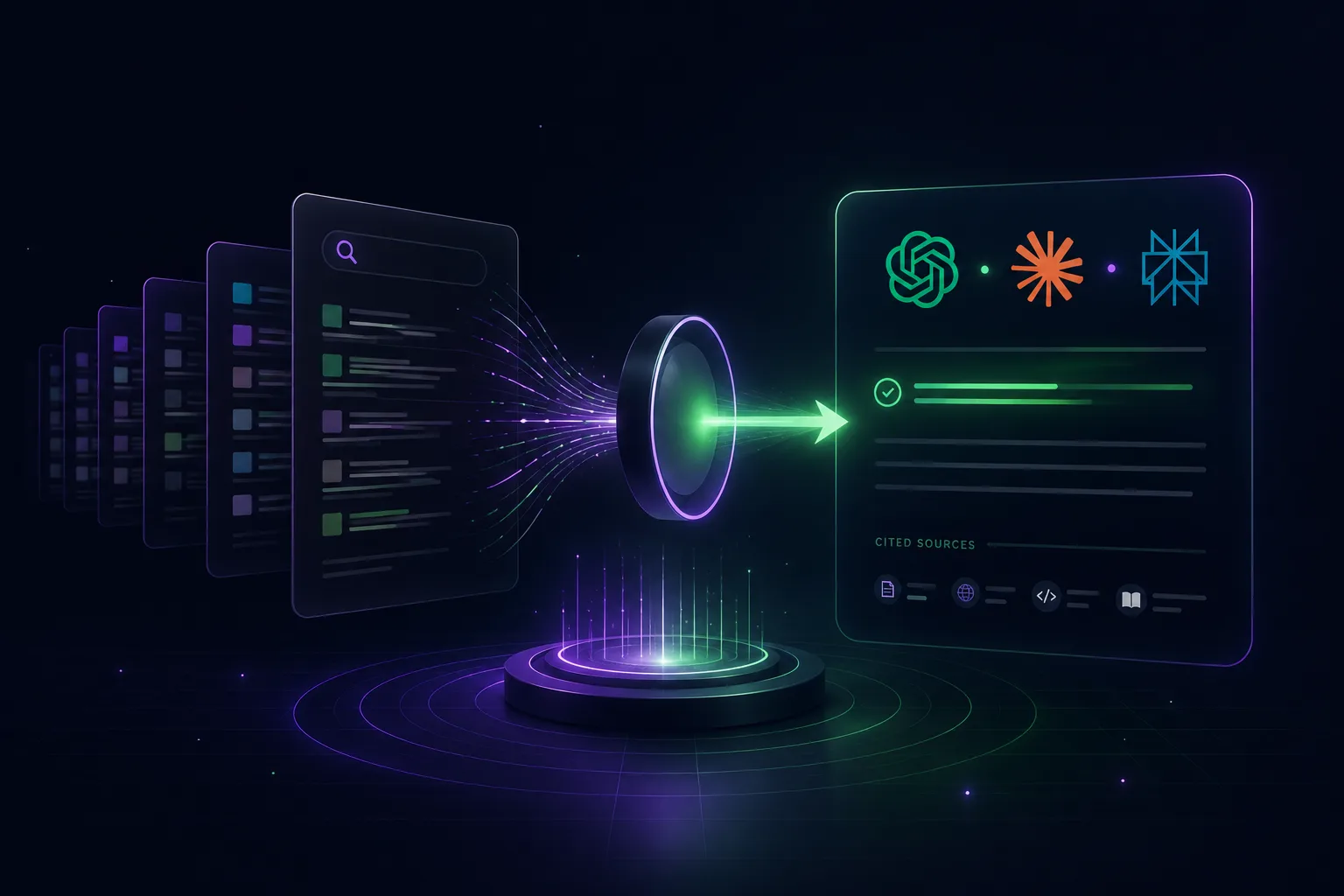
LLM answers are built from a Trust Hub of sources the model retrieves from or learned from in training. Engines weight the hub differently; the recipe is the same.

The crypto Trust Hub LLMs cite from in 2026
Six source categories feed every AI citation. Mix shifts by engine; the structure is the same.
Illustrative model of the crypto Trust Hub. Percentages per Profound, Demandsage, Surfer SEO (2025-2026); category structure is not a study finding. GUERRILLABUZZ

You get cited based on what others say about you across these six categories, not what you say on your own site.

Your own domain only gets cited consistently for branded queries unless you have unusually high authority. For category queries, citation comes from the Trust Hub.
The GEO Plays for Crypto Projects in 2026#

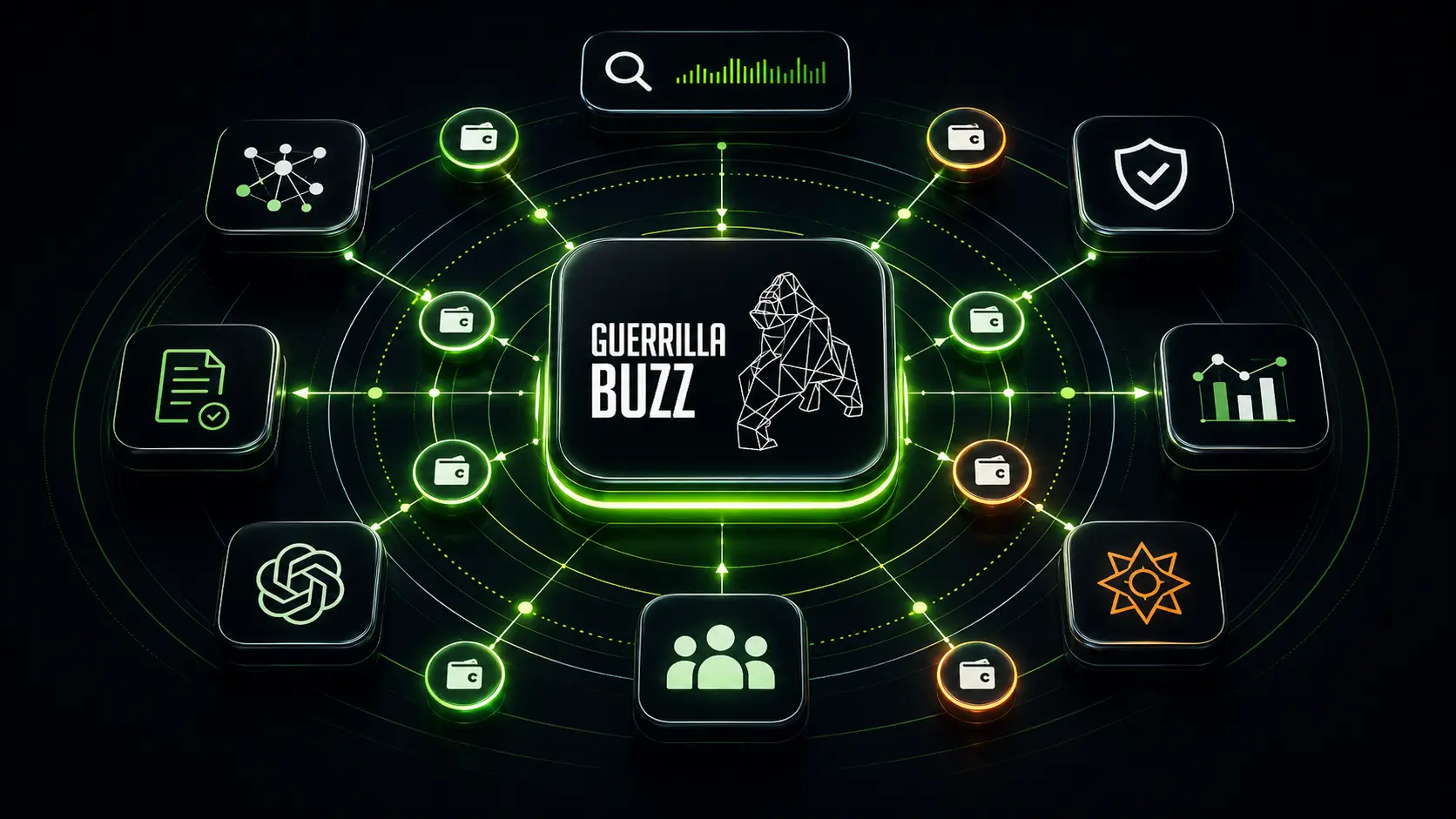
Seven plays, sequenced. The first three are foundation; nothing downstream works without them. The last four compound over months. None of this is a quick win; anyone selling a 30-day citation result is selling something else.

LAYER 01 · FOUNDATION
Get the canonical definition and on-domain structure right first.
If the model can't extract what your project does, it won't cite you.
01

Lock the canonical definition for your crypto project

Write a 40 to 80 word definition of what the project is, who it serves, and what differentiates it. Use it verbatim across every surface: home page, every landing page, docs intro, every PR draft, X bio, Crunchbase, the Wikipedia draft, the LinkedIn page.

Identical wording across the surface area is the strongest signal LLMs read for what to repeat back.
SIGNAL · MODEL ANSWERS YOUR BRANDED QUERY WITH YOUR EXACT WORDING
WHEN Before any GEO work· OWNER Founder + Head of Marketing· OUTCOME One canonical doc, distributed everywhere
02

Restructure crypto content so LLMs extract it cleanly

Most crypto content is written for humans who scroll past the intro. LLMs evaluate relevance from the first 200 words. Rewrite for both.

What this produces, page by page:

  1. Answer-first opening: 40 to 60 word direct answer to the page's core question.
  2. H2s that are full questions containing the topic keyword.
  3. Specific numbers with named sources, not "studies show."
  4. FAQ blocks with FAQPage JSON-LD schema.
  5. Comparison tables for any "X vs Y" framing.
  6. Named author bylines with Person schema.
SIGNAL · YOUR FAQ ANSWERS GET QUOTED VERBATIM IN AI OVERVIEWS
WHEN Months 1-3, every key page· OWNER Content + SEO· OUTCOME 10-20 key pages restructured
What LLMs extract from a crypto page
Same fictional L2, two ways to describe it. Extraction decides citation.
Conceptual illustration of content extractability. Sample copy and project are fictional. GUERRILLABUZZ

Specific numbers are quotable. Adjectives are not.

03

Ship an LLM Sitemap that gives AI crawlers a map of the project

A standard XML sitemap tells search engines which pages exist. An LLM Sitemap is a clustered HTML page that tells AI crawlers what the project does, how the pages relate, and when to recommend it. We developed the methodology at Growtika for B2B SaaS and adapted it for crypto.

Structure: pillar-to-cluster hierarchy with named semantic relationships, first-person FAQ sections per cluster, category comparison tables, and a clean canonical definition at the top. Built to be machine-readable.

SIGNAL · BRANDED CATEGORY QUERIES SURFACE YOUR DOMAIN IN CITATIONS
WHEN Month 2-3· OWNER SEO + Engineering· OUTCOME One LLM Sitemap page, indexed and linked from footer
LAYER 02 · TRUST HUB
Earn presence on the sources LLMs actually cite from.
No amount of on-domain work substitutes for being in the Trust Hub.
04

Build a real Reddit presence for your crypto project

Reddit is the GEO move most crypto teams ignore and the one with the biggest payoff. ~21% of Google AI Overview citations include Reddit links, and Perplexity surfaces it constantly on category questions. The catch: you can't fake it. Promotional posts get removed; throwaway accounts get filtered.

DO 90 days of useful contribution in r/CryptoCurrency, r/Defi, and the 4 to 6 subs where your category lives. Founder AMAs. Transparent updates. Comparison breakdowns that include competitors.
DON'T Hire a "Reddit agency" to post for you. Mods detect it within a week. Drop announcement posts with no prior account history. Buy upvotes.
SIGNAL · YOUR PROJECT APPEARS IN A TOP-VOTED CATEGORY THREAD
WHEN Continuous, 90 days minimum before measurement· OWNER Founder + community lead· OUTCOME 3-5 well-upvoted threads per quarter
05

Earn editorial coverage in tier-1 crypto media

CoinDesk, The Block, Decrypt, and Cointelegraph still matter, but for a different reason. Direct click value compressed; authority value compounded. These domains feed LLM training corpora, get cited in AI Overviews, and lend domain-level trust to projects they cover.

SHAP 0.63
Domain traffic is the strongest AI citation predictor per SE Ranking's 2.3M-page study; high-traffic sites earn 3x more citations. Tier-1 placements put your story on those domains.

Skip press release wires. They land on tier-3 domains that almost never appear in citations. Pursue 2 to 4 named editorial placements per quarter. Each is a permanent input into how AI describes your project.

SIGNAL · MODEL ANSWERS YOUR CATEGORY QUERY AND CITES A TIER-1 ARTICLE ABOUT YOU
WHEN Continuous, with launch and milestone spikes· OWNER PR lead· OUTCOME 8-16 tier-1 placements per year
06

Earn a Wikipedia page if the crypto project meets notability

Wikipedia is the most-cited single domain in ChatGPT (~7 to 8% of all citations). Once you have a page, it compounds free forever. Notability is the gate: you need multiple independent secondary sources covering the project substantially. That is why tier-1 PR comes first.

Do not write the page yourself. Brief an experienced Wikipedia editor with the source list, let them assess notability, and accept that the first draft may get rejected. A clean entry is worth the iteration.

SIGNAL · CHATGPT CITES YOUR WIKIPEDIA PAGE ON BRANDED QUERIES
WHEN After 12+ months of tier-1 coverage· OWNER External Wikipedia editor· OUTCOME One indexed Wikipedia page, properly sourced
LAYER 03 · MEASUREMENT
Track citation share. Rankings are a lagging indicator now.
If you cannot measure who gets cited, you cannot improve it.
07

Measure citation share for your crypto category every month

Pick 15 to 25 representative queries that a buyer, dev, or institutional researcher in your category would actually type. Run them through ChatGPT, Perplexity, Gemini, and Google AI Overviews monthly. Log who gets cited, on which queries, alongside which competitors.

The cited list is your competitive landscape now. If you do not log it, you are optimizing blind.

Tools that automate this: Ahrefs Brand Radar, Profound, AthenaHQ, Goodie AI, Quirk. Manual baseline: 1 to 2 hours per month.

SIGNAL · CITATION SHARE CURVE TRENDS UP MONTH OVER MONTH
WHEN First measurement at month 1, then monthly· OWNER Head of Marketing· OUTCOME Monthly citation share report tied to the program
AI crawlers are already reading your crypto docs
A typical server log. The highlighted requests never appear in an analytics dashboard.
Conceptual illustration of AI crawler traffic in a server access log. Log entries are fictional. GUERRILLABUZZ

If analytics is your only lens, AI demand is invisible. The server log sees it.

Why Most Crypto Projects Fail at GEO: The 6 Failure Patterns#

Field observations from 18 months of watching teams try and fail. Ordered by severity. Each is recoverable, but not while it continues.

HIGH
01 / 06
Chasing AI citations without earning domain authority first

Teams that skip third-party trust and optimize on-page directly produce nothing. SE Ranking's 2.3 million page study put domain traffic at SHAP 0.63, the single largest AI citation predictor; high-traffic sites earn 3x more citations. Without that foundation, structured content gets ignored.

IMPACT6 months of work, zero category-query citations.
HIGH
02 / 06
Treating GEO as separate from SEO and crypto PR

Three siloed teams, three budgets, three content briefs. The foundations overlap ~70%. Running them separately produces conflicting URLs, duplicated topics, and missed compounding. One coordinated program outperforms three good standalone ones.

IMPACTBudget waste of 30-50% on duplicated work.
MEDIUM
03 / 06
Tier-3 PR syndication mistaken for citation work

Spending $5K to $15K a month blasting press releases to 200 low-authority outlets. Placements are real. Domains are not in any LLM Trust Hub. They do not feed citations, do not lend authority, and distort the marketing dashboard.

IMPACT$60K-$180K per year of spend with no citation lift.
MEDIUM
04 / 06
Inconsistent canonical definition across the surface area

Home page calls it "a modular L2 for gaming," docs call it "an EVM-compatible rollup," Crunchbase calls it "Web3 infrastructure," X bio calls it "the future of on-chain entertainment." LLMs see four different products. Output is generic filler instead of your exact positioning.

IMPACTBranded queries return competitor-flavored answers.
MEDIUM
05 / 06
Publishing on Medium instead of an owned domain

Medium drains authority from your domain to medium.com and contributes near-zero to AI citation. Crypto teams still do it because it feels easier than building owned-site content velocity. Every Medium post is a backlink you should have earned to yourself.

IMPACT2-3 years of authority lost to a third-party domain.
LOW · WATCH
06 / 06
Measuring rankings instead of citation share

The team reports weekly rankings. The CMO presents green numbers. Meanwhile actual category queries are answered by AI with someone else's project cited. Citation share is the metric that tracks business reality.

IMPACTLeadership sees a healthy dashboard while real visibility decays.

Timeline and Budget for a Crypto GEO Program#

The plays compound on different curves. Plan in 90-day blocks, measure citation share monthly, expect the curve to bend at month 4 to 6.

Crypto GEO program timeline, month 1 to 12
An illustrative citation share curve for a foundation-first crypto GEO program.
Illustrative model of citation share progression for a foundation-first crypto GEO program. Not measurements from any specific project. GUERRILLABUZZ

None of this is a 30-day project. The window where the cited list is still movable is still open.

Budget scales with stage. Pre-launch runs lean at $6K to $12K per month on foundation and Reddit. Growth-stage ($15K to $30K) layers in tier-1 PR and content velocity. Scale-stage ($35K to $70K) adds Wikipedia, full citation tracking, and original research. Above $70K, you are funding proprietary data that gets cited because nobody else has the numbers.

Related reading: the 5 growth hacks we use to get clients featured on ChatGPT and Claude, our 2026 crypto presale marketing playbook.

Want help implementing this? Get in touch with GuerrillaBuzz or browse more 2026 teardowns on the blog.

How LLMs Changed Blockchain Marketing: Frequently Asked Questions

12 questions across 1 category.

General

Keep reading

Related articles

All articles
How We Get Clients Featured on ChatGPT and Claude: 5 Growth Hacks

How We Get Clients Featured on ChatGPT and Claude: 5 Growth Hacks

Crypto Presale Marketing in 2026: A Practical Guide for Founders

Crypto Presale Marketing in 2026: A Practical Guide for Founders

How to Get Your Crypto Project Recommended by ChatGPT

How to Get Your Crypto Project Recommended by ChatGPT

See more articles

Join us on this wild ride!

We're here to make waves and create value where there was none.
Let's turn your crypto dream into reality!

Let's do this